Special Request: In the Web of Corruption
Play Special Request: In the Web of Corruption
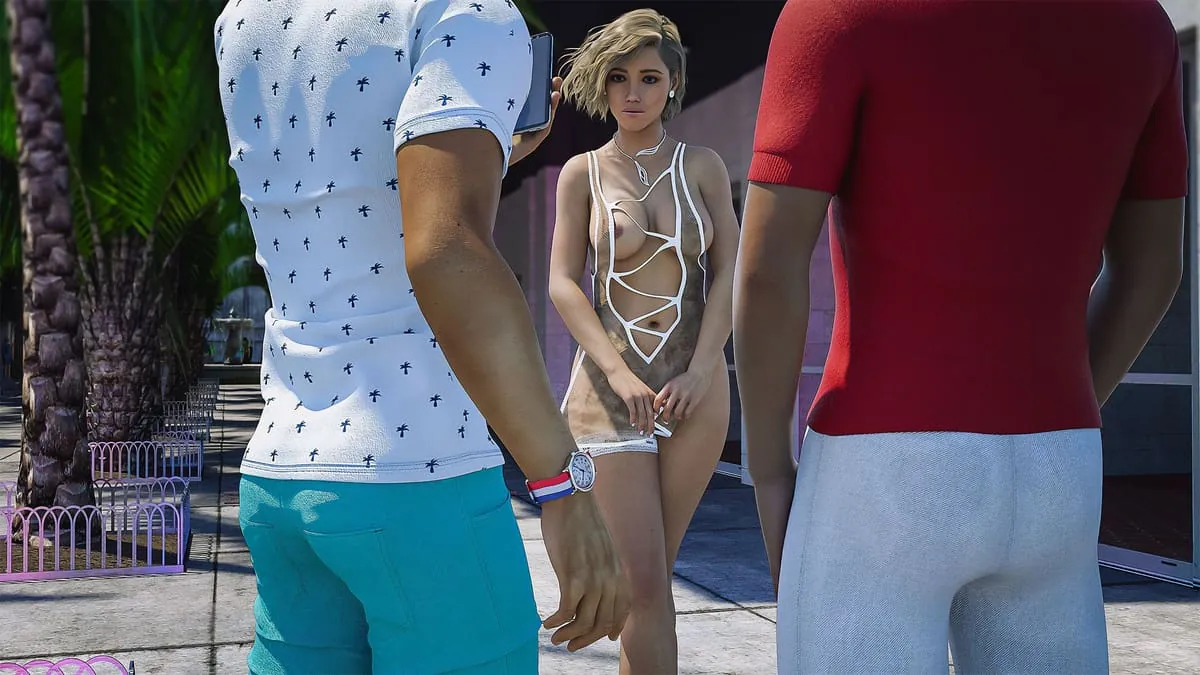
Special Request: In the Web of Corruption Screenshots


























Special Request: In the Web of Corruption review
Dive into Laura’s gripping tale of power, choices, and dark temptations
Imagine stepping into the shoes of Laura, a respected public figure whose life unravels after one impulsive mistake in Special Request: In the Web of Corruption. This choice-driven psychological visual novel pulls you into a web of power dynamics, reputation risks, and moral dilemmas that test every decision you make. As Laura navigates blackmail from a shadowy syndicate, her marriage strains, work obligations mount, and hidden city secrets emerge. I’ve lost count of the nights I spent replaying scenes, uncovering how tiny choices lead to wildly different paths. If you’re ready to explore corruption’s allure and shape her fate, this guide reveals everything from core mechanics to key strategies for the deepest experience.
What Makes Special Request: In the Web of Corruption So Addictive?
I still remember the night I first clicked play on Special Request: In the Web of Corruption. 😮 I was just looking for a story-driven experience, something with a bit more bite than your typical romance visual novel. What I found instead was a gripping, nerve-wracking descent that had me leaning closer to my screen, my choices feeling heavier with every click. I wasn’t just playing a game; I was orchestrating a downfall, and I was utterly hooked. This isn’t just another visual novel—it’s a masterclass in tension and consequence. So, what exactly is Special Request: In the Web of Corruption? At its heart, it’s the story of Laura, and her journey is one you won’t easily forget.
As the official description perfectly puts it: ‘One impulsive mistake places Laura under the protection of a man who can erase problems — but never without a cost.’ ✨ That single sentence captures the terrifying allure of the entire experience. You step into the polished shoes of Laura—successful, respected, a figure in the charity scene—and with one bad decision, you watch her perfect world begin to crack. This psychological thriller VN expertly weaves themes of power, control, and moral compromise into a narrative that feels dangerously plausible. Let’s dive into what makes this Special Request game so uniquely compelling.
Who Is Laura and Why Does Her Story Hook You?
Laura is, on paper, a woman who has it all. 💼 A thriving career, a seemingly stable marriage, and a spotless public reputation bolstered by her charitable work. She’s relatable not because she’s perfect, but because her life is a carefully maintained performance, something many of us understand. The game brilliantly establishes this normalcy before pulling the rug out from under you (and her).
Her story hooks you because it’s a terrifying “what if” scenario. What if, in a moment of stress or poor judgment, you made a mistake that could destroy everything you’ve built? For Laura, that mistake leads her straight to BB, a mysterious and powerful “fixer.” He offers a BB protection scheme, a way to make her problem disappear. But his help is a deal with the devil; the cost is never just money. It’s about obligation, influence, and slowly ceding control.
This Laura visual novel excels at showing the strain from every angle. Your husband becomes distant, suspicious. Your work obligations transform from professional challenges into potential traps or leverage. The very reputation you’re trying to protect becomes a cage. You’re not just managing a scandal; you’re managing the psychological erosion of a person. The narrative forces you to ask: How far would you go to keep your life from unraveling? Every choice feels personal because you’ve built a connection with Laura’s world before it starts to crumble. 👁️🗨️
How Choice-Driven Mechanics Shape Your Playthrough
If the story is the hook, the choices are the razor-sharp point. Special Request: In the Web of Corruption is fundamentally a game about corruption choices. From the very first chapter, your decisions are not just about dialogue options; they are investments in a path, tiny weights added to the scales of Laura’s soul. This isn’t a binary “good or evil” meter. It’s a nuanced slide into a world where “practical” solutions often have a dark tint.
The game is structured across four detailed chapters, and your journey begins with critical early events that set the tone. Your actions during the intro weekend and the pivotal “Week 0″—like a tense Sunday at the orphan house—create immediate ripple effects. To give you a sense of how deep the branching goes, here are just a few story triggers from the early game and their potential outcomes:
- Check her sausage: A seemingly minor, almost silly choice that can reveal character traits and set a tone for your relationship with another character, influencing future dialogue options. 🌭
- Bribe the policeman: This is a major early crossroads. Do you maintain your purity and face legal consequences, or take the first concrete, corrupt step to make your problem go away? This single decision can lock or unlock entire narrative paths and character interactions later.
These mechanics mean that two playthroughs can feel like entirely different stories. A “Pure” Laura might navigate threats with integrity, facing different challenges and uncovering truths through hardship and alliance. A “Corrupt” Laura might wield influence and sensual power to control her situation, unlocking scenes and relationships that are closed off to her purer counterpart. The game doesn’t judge you; it simply presents the consequences, making each playthrough a deeply personal reflection of your own inclinations under pressure. 🔀
| Chapter Focus | Pure Path Tendencies | Corrupt Path Tendencies |
|---|---|---|
| Early Game (Chapters 1-2) | Refusing deals, seeking honest solutions, maintaining personal boundaries. | Accepting “help,” using shortcuts, exploring leverage over others. |
| Late Game (Chapters 3-4) | Facing harder consequences but building genuine alliances; uncovering a different “truth.” | Gaining power and control, but becoming entangled in webs of obligation; seeing a darker version of events. |
Unpacking the Psychological Pure/Corrupt System
This brings us to the brilliant core mechanic: the pure corrupt system. 🧠 This isn’t a simple karma meter you check in a menu. It’s an integrated, psychological framework that changes how the world reacts to Laura. Your cumulative corruption choices directly alter her perception, the scenes you access, the relationships you can form, and even the fundamental “truth” of the story you uncover.
Think of it as the game’s moral compass, but one that’s been magnetized by the seedy underbelly of its world. Choosing corrupt options might make certain intimidating figures like BB or representatives from the influential PAM company more respectful (or more possessive) of you, seeing you as a player in their game. Conversely, pure choices might open avenues of trust with different characters, offering sanctuary or information that is unavailable to a compromised Laura.
The intimate scenes in this Special Request game are a prime example of the system’s narrative integration. They are rarely just for show. In a corrupt playthrough, they can represent transactions of power, moments of manipulation, or the price of a favor. In a pure playthrough, their context or availability shifts dramatically, often focusing on genuine connection or being absent altogether, replaced by different kinds of narrative tension. It’s crucial to note that all characters are explicitly 18+, and these elements always serve the larger story of power dynamics and personal compromise.
So, how do you navigate this system? Here’s my actionable advice from spending countless hours in Laura’s world:
- Track Your Leaning Early: You won’t see a number, but pay close attention to character reactions. If BB starts being more familiar or PAM contacts treat you like an asset, you’re leaning Corrupt. If you’re consistently facing stiffer resistance but finding unexpected allies, you’re on a Purer path. 📝
- Embrace the First Playthrough: Don’t reload saves to “fix” choices. The magic of this psychological thriller VN is living with the consequences. Let your natural instincts guide Laura. That first, unspoiled journey is the most powerful.
- Replay for Branches: Once you’ve seen one ending, start over with a deliberate goal. Go full Corrupt to see the dark pinnacle of power BB offers. Or strive for Pure to witness a story of resilience. The narrative branches are vast and rewarding.
- Look for the System’s Cues: The game is smart. Often, a “practical” or “advantageous” choice will nudge you toward corruption, while a “principled” or “costly” one supports purity. The tension lives right there in the decision prompt.
Understanding what is Special Request In the Web of Corruption is understanding that it’s more than a game—it’s a psychological playground. The pure corrupt system ensures that you are an active author of Laura’s tragedy or her tenacious survival. Every click matters, and every closed door means another one, for better or worse, has swung open.
Whether you’re drawn to the dark allure of the BB protection scheme or the difficult road of integrity, Laura’s story awaits. And if you find yourself wanting to explore every secret and unlock every possible ending, stay tuned—a complete walkthrough guide might just be your next special request. 😉
Special Request: In the Web of Corruption masterfully blends tense choices, deep psychology, and branching narratives that keep you coming back for more. From Laura’s impulsive start to the syndicate’s grip, every decision shapes a unique journey through power and compromise. Whether you chase pure redemption or embrace the corrupt thrill, the game’s replayability shines. My top tip? Experiment boldly—your perfect path awaits. Grab the latest version, dive in tonight, and share your wildest endings in the comments. What’s your go-to choice with Brute?